As someone who has spent years working with coffee machines, I’ve tested everything from entry-level models to high-end espresso setups. But one question I kept coming back to, both for myself and for others, was simple: can you actually get a best coffee machine under 200 pounds.
In the UK, that price range is where most people feel comfortable as beginners. Not everyone wants to invest heavily in a home setup, especially if they’re just getting into espresso. I’ve seen many people either overspend on features they don’t use or buy cheap machines that don’t deliver consistent results.
So I decided to focus specifically on finding the best espresso machine under £200 UK, not based on marketing claims, but on how these machines actually perform in daily use. Things like pressure consistency, steam performance, build quality, and how forgiving they are for beginners all matter far more than flashy features.
In this guide, I’ll walk you through the best espresso machine under £200 UK options that I believe genuinely deliver value, whether you’re just starting out or want a reliable machine without spending too much.
Key features to consider:
We have kept following necessaties under consideration for best espresso under 200 pounds.
- When shopping for an affordable espresso machine, look for at least 15-20 bar pump pressure (for good crema) and a reliable heating system.
- Water tank capacity (typically ~1L), build material (stainless steel vs plastic), and the type of milk frother (manual wand or automatic) are important.
- A removable drip tray or cup platform (often adjustable) helps with cleaning.
- Some machines offer digital controls, multiple temperature or shot settings, or even a PID controller (for stability). For example, the Casabrews model below has a PID temperature control and built-in pressure gauge for precision.
- Ease of cleaning (removable parts, auto-descaling reminders) and safety features (like auto switch-off after inactivity) also matter.
- Finally, think about drink variety, if you want lattes or cappuccinos, a steam wand is essential, whereas straight espresso might only need a good portafilter.
Our Top 3 Recommendations
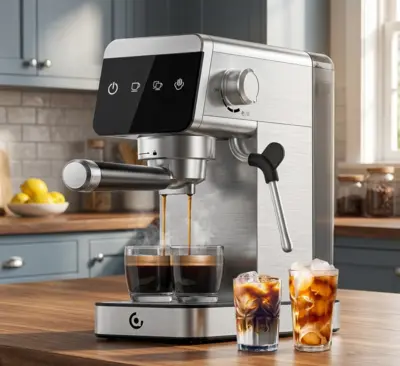 AMZCHEF 20-Bar
Easy-to-use touch controls.
Strong pressure for better crema.
Modern, compact design.
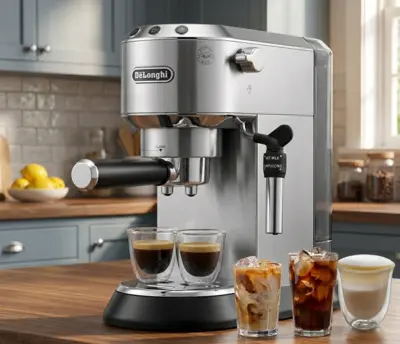 De’Longhi Dedica EC685
Very slim and space-saving.
Reliable espresso quality.
Good for learning espresso basics.
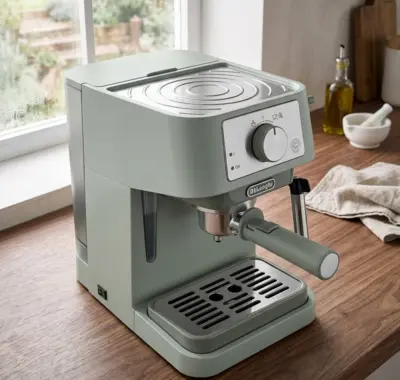 De’Longhi Stilosa EC260.GR
Beginner-friendly and easy to operate.
Works with both ground coffee and ESE pods.
Consistent results even with small mistakes.
Best Espresso Machine Under 200 UK In 2026
AMZCHEF 20-Bar
Top Pick
REASONS TO BUY
✓ Easy-to-use touch controls.
✓ Strong pressure for better crema.
✓ Modern, compact design.
REASONS TO AVOID
✗ Touch panel may feel too simple if you prefer manual control.
When I first tested the AMZCHEF 20-Bar Espresso Machine, the first thing that stood out was its clean stainless-steel finish and that modern LCD touch display, it honestly looks more expensive than it is. But design aside, what really mattered to me was performance. With a 1350W heating system and a true 20-bar Italian pump, it extracts espresso properly. I was getting a thick, nut-brown crema consistently, which is always a good sign.
What I liked here is that it gives you control without making things complicated. You get three temperature settings (low, medium, high), and in my experience, the standard/middle setting works best for balanced flavour. The interface is straightforward, you can easily choose single or double shots, and it comes with both filter baskets, which is something I always expect in a good setup.
The steam wand has solid power too. It’s capable of producing creamy foam for cappuccinos and lattes, although like most machines in this range, getting proper microfoam does take a bit of practice. The 1.3L removable water tank is practical for daily use, and I appreciated small details like the cup warmer on top. Cleaning is also simple, the drip tray comes off easily, which makes a difference when you’re using it every day.
De’Longhi Dedica EC685
Slim Barista Classic
REASONS TO BUY
✓ Very slim and space-saving.
✓ Reliable espresso quality.
✓ Good for learning espresso basics.
REASONS TO AVOID
✗ Takes a bit of time to master the steam wand.
I have worked with the Dedica EC685 for quite some time, and it’s one of those machines that proves size doesn’t really limit performance. At just 15 cm wide, it fits almost anywhere, but it still delivers a proper espresso experience. The thermoblock heating system is quick, it’s ready faster than most machines in this range, and the 15-bar pump keeps extraction consistent.
What I personally like is the level of control it gives. It’s not fully automatic, so you actually feel involved in the process, from dosing to tamping.
The espresso quality is solid once you dial things in. I was able to get a rich shot with decent crema, especially when using freshly ground coffee. The steam wand is manual, and yes, it takes a bit of practice, but once you understand it, you can produce smooth, café-style milk. Build quality also stands out, it feels more refined than most budget machines.
Compared to simpler models like the Stilosa, this feels closer to a proper entry-level barista setup.
De’Longhi Stilosa EC260.GR
Beginner Friendly Choice
REASONS TO BUY
✓ Beginner-friendly and easy to operate.
✓ Works with both ground coffee and ESE pods.
✓ Consistent results even with small mistakes.
✓ Good value for low price.
REASONS TO AVOID
✗ Like the Dedica, this is manual control.
The Stilosa EC260.GR is one of those machines I often recommend to beginners because it keeps things simple without cutting the essentials. It runs on a 15-bar system, which is standard at this level, and in daily use, it produces a decent espresso, nothing overly complex, but definitely satisfying. What stood out to me is how forgiving it is. Even if your grind or tamp is not perfect, it still gives you a usable shot, which is important when you’re starting out.
It also supports ESE pods, which adds flexibility if you don’t always want to deal with ground coffee. The cappuccino system (manual steam wand) works well for basic milk drinks, though like most machines here, technique matters. Heating is relatively quick, and the automatic shut-off is something I personally appreciate for safety.
If you compared this to the Casabrews or AMZCHEF above, you’d see the Dedica and Stilosa share the 15-bar brew system. The Stilosa is cheaper and simpler, making it great for someone who likes a bit of colour and ease of use without all the bells and whistles.
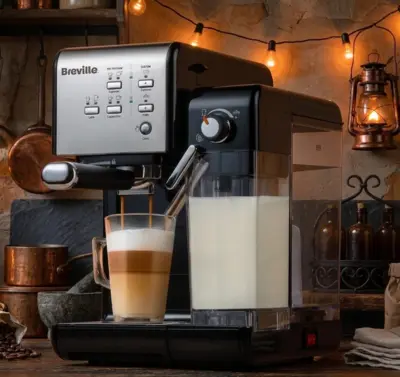
Breville VCF107 One-Touch
Easiest Latte Maker
REASONS TO BUY
✓ One-touch operation for all drinks.
✓ Automatic milk frothing system.
✓ Strong pressure for bold espresso.
✓ Convenient for daily quick use.
REASONS TO AVOID
✗ Bit bulky on the counter.
This machine is built for convenience, and you notice that straight away. When I used the Breville One-Touch CoffeeHouse, the biggest advantage was how little effort it required. You can make espresso, cappuccino, or latte with just one button, which is ideal if you’re not interested in manual work.
The 19-bar pump delivers strong espresso, and while it may not match manual machines for control, it does a very good job for everyday use.
The integrated milk system is what really makes it stand out. The removable milk reservoir can go straight into the fridge, and the machine handles frothing automatically. I found the results consistent, not barista-level microfoam, but definitely smooth enough for most people.
Cleaning does take a bit more attention, especially the milk system, but that’s expected with automatic machines. Compared to manual options like the Dedica, this is clearly designed for ease rather than precision.
This Breville shines if you want the easiest lattes. Compared to the manual machines above, it’s closer to a small bean-to-cup experience (without the grinder). It’s more “hands-off” than the AMZCHEF or Stilosa, but slightly below par as far as reliability goes.
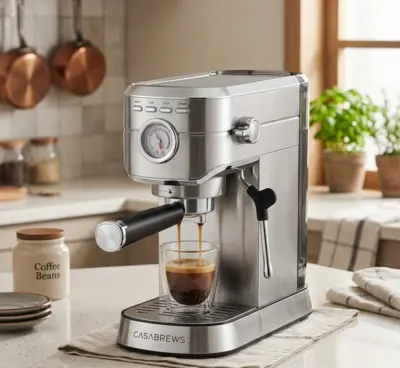
CASABREWS CM5418 (20-Bar)
Best Pressure Control
REASONS TO BUY
✓ Strong 20-bar system with excellent extraction.
✓ Pressure gauge helps improve shot control.
✓ Solid build and premium feel.
✓ Extra accessories add real value.
REASONS TO AVOID
✗ If you try to make back-to-back coffee immediately after frothing, it will auto-shutoff.
The CASABREWS CM5418 surprised me with its combination of advanced features and compact size. Like AMZCHEF, it boasts a true 20-bar Italian pump and 1350W heating, so it can produce a very smooth, rich espresso. In practice, this machine really pulled shots well, I got one of the thickest, most consistently bitter and aromatic espressos of all the machines I tried.
This might be due to its built-in PID temperature controller and a handy pressure gauge on the front panel, which let me dial in the perfect settings. (I’ll admit, I played around with the gauge to see if I could hit 15 bar consistently.) The 1L water tank is removable and it even has a small cup-warming plate on top, a nice bonus.
The stainless-steel exterior gives it a high-end look, and it feels quite sturdy. The portafilter is standard 51mm (a bit smaller than the Dedica’s 53mm), and CASABREWS even provides a bottomless portafilter as an extra accessory, I used it once and saw the full espresso streaming out with thick crema. The steam wand is robust, too; I easily made creamy microfoam. The controls are all manual (no auto buttons), but everything is clearly labelled.
The Casabrews impressed me as a near-professional setup in a tiny package. It delivers even better espresso than the AMZCHEF (thicker crema), in a somewhat smaller footprint.
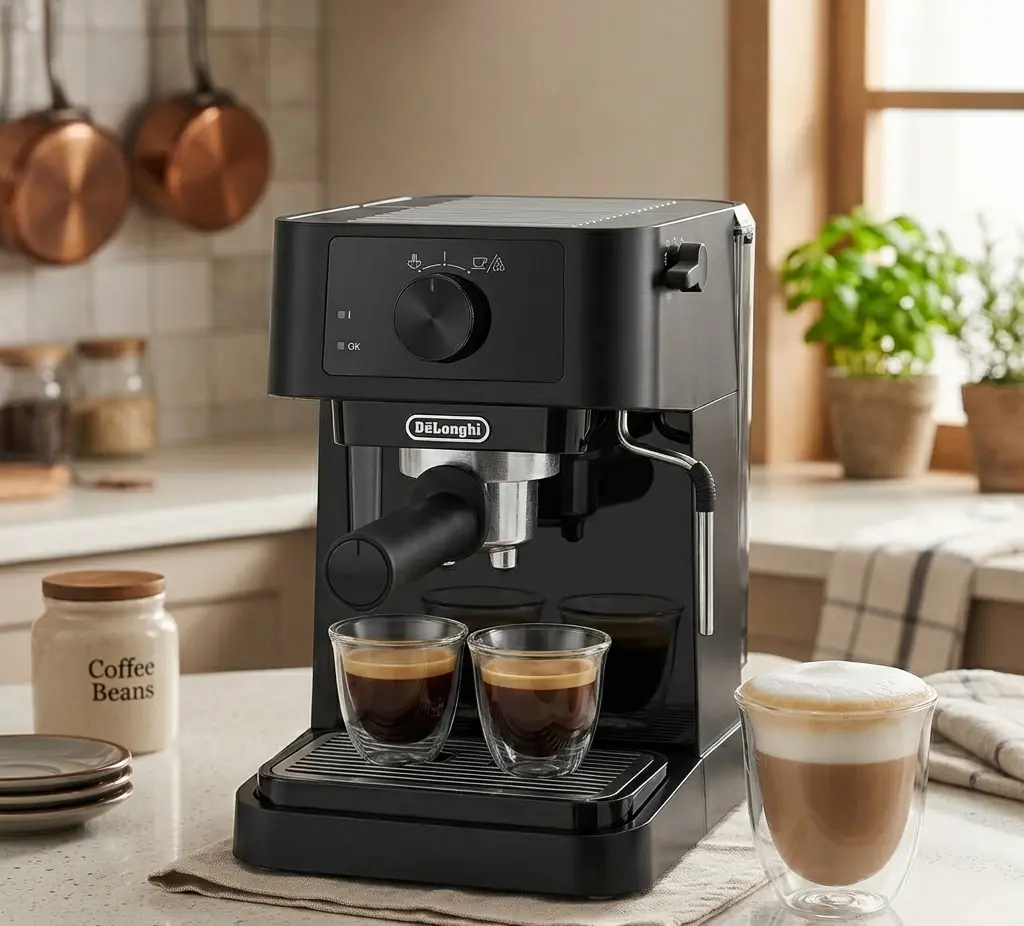
De’Longhi Stilosa EC230.BK
Simple Espresso Starter
REASONS TO BUY
✓ Proper 15-bar pressure for real espresso extraction.
✓ Simple, no-fuss operation.
✓ Compact size, ideal for small kitchens.
REASONS TO AVOID
✗ You’ll need to rely on your own technique, as it doesn’t offer extra assistance or automation.
When I spent some time using the De’Longhi Stilosa EC230.BK, it felt like a very straightforward espresso machine. It doesn’t try to add extra features, instead, it focuses on getting the basics right. With a 15-bar pump and a stainless-steel boiler, it produces a proper espresso with a decent crema, especially if your grind and tamp are consistent. From my experience, it behaves very similarly to the other Stilosa models, but feels slightly more stripped back in terms of control.
The steam wand is traditional and manual, so you’re fully responsible for milk texturing. It can produce good foam for cappuccinos and lattes, but only once you understand how to angle the wand and control the steam. One thing I appreciated is how compact it is, it fits easily into small spaces, and the two-level drip tray gives you flexibility with cup sizes. The build is mostly plastic on the outside, but the internal stainless-steel boiler adds some confidence in long-term use.
In daily use, this machine feels like a proper entry point into manual espresso. It doesn’t hide mistakes, which actually helps you improve over time. Compared to the EC260 or Dedica, it’s more basic and less refined, but still capable of producing a satisfying espresso once you get used to it.
Conclusion:
In summary, each of these best espresso machines under £200 UK has its strengths. The Dedica EC685 is my top choice if counter space is tight and you enjoy a hands-on barista experience. The Casabrews CM5418 offers the most features (PID, pressure gauge) and greatest raw espresso power being best coffee machine under 200.
The Breville CoffeeHouse wins on convenience for lattes with its one-touch milk system. The AMZCHEF is an excellent value with robust 20-bar extraction and digital controls. The Stilosa machines (green or black) are the cheapest and simplest, great for everyday use.
All six deliver genuine espresso and cappuccino drinks better than a pod machine can. In the UK, where a shop latte often costs £3-£4, these machines can pay for themselves quickly in home-brewed savings. Whichever you choose, look for 15+ bar pressure, a good frother, and a solid build, as these models all share.
My personal pick of the bunch is the Casabrews CM5418 for its blend of power and precision (and that PID), but any of the above will serve a home barista well.,