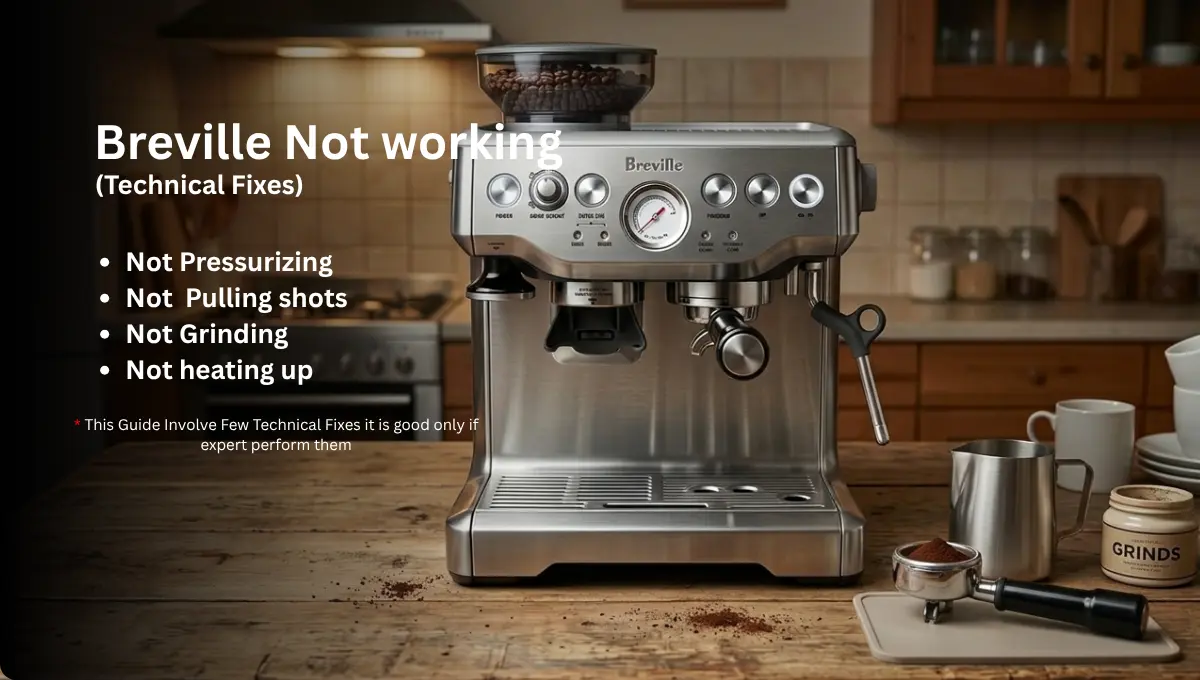
There’s a specific kind of frustration that only coffee lovers understand, you wake up, turn on your machine, everything looks normal… but nothing comes out. No pressure, no espresso, or worse, a weak and cold shot. I’ve personally seen this happen with many Breville BES870XL machines, the tricky part is that most issues don’t mean your machine is broken. In fact, many cases of breville espresso not working come down to small internal blockages or setup mistakes that are easy to fix once you understand how the machine works.
In this guide, I’ll walk you through real, practical fixes, both simple steps you can do at home and deeper technical insights that explain what’s happening inside your machine.
1. Not Hot Enough:
If your breville espresso not hot enough, don’t assume something is broken immediately. When your Breville machine produces lukewarm espresso instead of hot shots, begin with a few basic checks. Start by allowing the machine enough time to fully heat up, switch it on early and run a quick hot water cycle without coffee to warm the internal system. Let hot water pass through both the group head and steam wand until they feel properly heated. It’s also important to preheat your portafilter and cup using hot water before brewing.
After doing this, try pulling another shot. If your model allows it, confirm that the brew temperature setting is adjusted to the highest level. Should the issue persist, mineral buildup inside the boiler or internal tubing is often the cause. Running a proper descaling cycle using the recommended solution or a 50/50 vinegar-water mix can clear this buildup and restore heating efficiency. Make sure to flush the machine thoroughly afterward.
If the temperature still isn’t right, the issue may lie within the internal components. In such cases, a technician would inspect the machine by testing key heating elements. Faulty thermostats or damaged heating elements are common reasons for poor heat output. Using a multimeter, the technician can check whether the heating coil and thermostat are functioning correctly.
If a defect is found, replacing the part, such as the thermocoil or heating tank can resolve the issue. Additional checks might include the temperature sensor and control board, as incorrect readings from these parts can affect heat regulation. Once repairs are complete, testing the brew temperature with a thermometer helps confirm that the machine is back to normal performance.
2. Not Enough Pressure:
If your breville espresso not enough pressure, and your espresso shots are slow or barely dripping, start by reviewing your setup. Ensure you’re using the correct portafilter basket, many Breville models include both pressurized and non-pressurized options. For better results, use the non-pressurized basket along with an appropriate grind size. Grind that’s too fine or an overfilled basket can restrict water flow and reduce pressure.
Adjust to a medium-fine grind and slightly lower the dose to improve extraction. Make sure your tamping is even but not overly forceful. In addition, mineral buildup can affect pressure, so descaling the machine and flushing it with clean water can help remove any obstructions. Also confirm that the water tank is filled properly and securely in place.
If these steps don’t solve the issue, internal components may need attention. The pump is often responsible for pressure-related problems. A technician can test its output using a pressure gauge and determine whether it needs replacement. Other parts like the solenoid valve or pressure relief valve may also be blocked or malfunctioning, restricting proper flow.
During inspection, the technician may remove the shower screen and gasket to check for wear or debris. Cleaning or replacing these parts can often restore normal pressure. In some cases, sensors like the pressurestat or even the control board may require testing or replacement. Addressing these elements ensures the machine delivers consistent pressure for proper espresso extraction.
3. Water Not Coming Out:
When you face breville water not coming out of portafilter during brewing, begin with a full cleaning. Remove the portafilter, discard any coffee grounds, and rinse the basket thoroughly. Clean the group head gasket and perform a backflush using a cleaning disc. Lock it into the portafilter and run a short brew cycle without coffee, then remove it and flush again.
Check the shower screen for trapped grounds and clean it if necessary. Make sure you’re using correctly ground coffee and not packing it too tightly. Verify that the water reservoir is filled and properly seated, as low water levels or air leaks can disrupt flow. Descaling is also essential here, as mineral deposits can block internal pathways. Sometimes, gently tilting or shaking the machine while the pump is running can help remove trapped air.
If the problem continues, deeper inspection is needed. A technician would typically disassemble the group head to look for blockages in the solenoid valve or other internal components. The three-way solenoid valve, which directs water during brewing, can become clogged with scale or coffee residue.
Cleaning or replacing this part often restores flow. The pump may also be tested to ensure it’s working correctly. If water flows without the portafilter but stops when it’s attached, the issue could be a worn or overly tight gasket. Replacing the rubber seal usually fixes this. After these repairs, water should move through the portafilter as expected.
4. Not Pulling Shot:
If your breville espresso not pouring or breville espresso not pulling shot, sometimes the machine appears to build pressure, but no espresso actually pours. In this case, begin by checking the settings. Ensure you’re using the correct shot mode, single, double, or manual, depending on your machine. Try running a manual shot without the portafilter to see if water flows freely. If no water comes out, it may indicate a pump or valve issue. Also confirm that the steam function isn’t accidentally selected.
Cleaning and descaling the machine is essential, as buildup can interfere with water flow. Testing with a coarser grind or performing a manual flush can help determine if the issue is related to coffee resistance. A quick reset, turning the machine off and unplugging it briefly can sometimes fix minor software glitches.
If the issue persists, internal faults are likely. A technician would examine the solenoid valve, which may be clogged or stuck. Backflushing with a cleaning solution can sometimes resolve this, but in other cases, replacement is required. The pressure gauge may also be faulty, giving inaccurate readings.
During inspection, the technician may test the pump directly and check the control board. Most often, cleaning or replacing the valve and ensuring the pump is working correctly will fix the issue. Once resolved, the machine should resume normal espresso extraction.
5. Not Grinding:
When your breville espresso not grinding, it’s usually a mechanical or feeding issue. If the built-in grinder stops producing grounds or makes noise without output, begin with simple troubleshooting. Turn off and unplug the machine, then remove the bean hopper. Check for stuck beans or blockages, which can happen with oily beans. Clean the hopper and try running a small amount of beans again.
Adjust the grind setting to a coarser level, as extremely fine settings can stall the motor. Remove and clean the burrs, brushing away any leftover grounds, and ensure everything is securely reassembled. Also check the grind amount setting, as it may be set too low.
When these steps don’t work, the issue may be mechanical. A technician would open the machine to inspect the grinder assembly. Common problems include stripped gears or broken connections between the motor and burrs. If the motor runs but the burrs don’t move, the internal drive gear is likely damaged. Repairing this requires replacing the gear or burr assembly.
The motor itself may also be tested for proper function. In some cases, worn burrs need replacement. For machines under warranty, a full replacement may be offered. Otherwise, installing new parts usually restores proper grinding performance.
6. Not Pressurizing:
If your breville espresso not pressurizing or breville espresso not reaching espresso range, the pressure gauge becomes a key indicator. If it never reaches the espresso zone, something is limiting resistance or flow.
Start with simple adjustments, grind finer, increase coffee dose slightly, and ensure proper tamping. Also, make sure the machine is fully heated, as temperature affects pressure behavior.
On a deeper level, this issue often involves pump performance. Over time, pumps lose efficiency, especially if exposed to hard water or frequent dry runs. Another overlooked factor is electrical stability. Voltage fluctuations can affect both the pump and heating system, leading to inconsistent pressure. A technician would measure pump output, inspect internal valves, and replace components if necessary to restore proper pressure.
Final Thoughts:
Most problems related to breville espresso not working are not permanent failures. They are usually caused by buildup, incorrect settings, or small internal issues that develop over time.
From my experience, regular maintenance is the biggest difference between a machine that lasts years and one that constantly has issues. Cleaning, descaling, and understanding how your machine behaves can prevent nearly all of these problems.
If you take the time to diagnose the issue properly, you’ll not only fix your machine but also improve the quality of your espresso. And once everything is working correctly again, the difference in taste, pressure, and consistency is immediately noticeable.