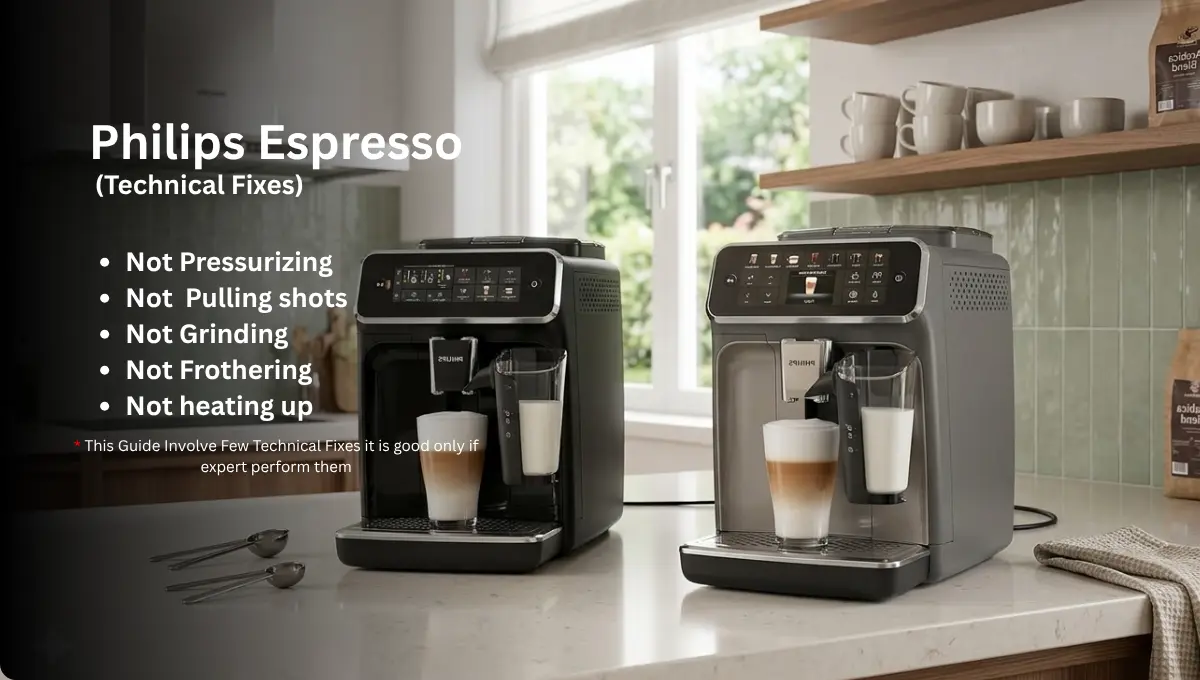
If your Philips espresso machine suddenly stops working the way it used to, you’re not alone. Many users notice issues like weak coffee, no flow, or milk not frothing properly even when the machine seems fine from the outside. I’ve seen this happen multiple times with models like the Philips 3300, 4400, 5500, 1200 series and LatteGo series, where small internal or maintenance-related issues slowly affect performance.
This guide is written to help you understand real problems people face with Philips machines and how to fix them properly. Whether your Philips espresso not working, not heating, or not dispensing coffee, you’ll find practical solutions here. The focus is simple: clear fixes, real causes, and expert-level insight without confusion.
Not Heating (Not Hot Enough):
If your coffee is coming out lukewarm, the first thing to check is preheating. Always let the machine fully warm up and run a hot water cycle before brewing. Cold cups also reduce temperature quickly, so rinsing them with hot water helps more than most people expect.
Check your machine settings as well, since some Philips models allow temperature adjustment. Another common cause is scale buildup inside the system, which blocks proper heat transfer, so regular descaling is important.
From a technician’s perspective, this issue often points to the thermoblock or temperature sensor. In machines like the Philips 3200 or 5400 LatteGo, the heating system depends on a stable sensor reading. If the thermistor gives incorrect feedback, the machine won’t reach the right temperature.
In some cases, the heating element itself weakens over time. A technician would test resistance, inspect internal wiring, and recalibrate or replace the faulty component if needed.
Not Enough Pressure (Weak Coffee Extraction):
Weak or watery espresso usually comes from grind size or flow issues. If the grind is too coarse, water passes too quickly and doesn’t extract flavor properly. Adjust the grinder to a finer setting and make sure the brew group is clean. Coffee oils and residue can block proper pressure buildup, so rinsing the brew unit regularly helps restore performance. Also, ensure you are using fresh beans, as stale coffee affects extraction quality more than expected.
At a deeper level, pressure problems can come from the pump or internal valves. Philips machines use vibration pumps designed to create consistent brewing pressure, but if the pump weakens or a valve leaks, pressure drops instantly.
In models like the Philips Xelsis, technicians often check the pressure system by testing pump output and inspecting the pressure relief valve. If the valve is stuck open or the pump cannot maintain pressure, replacement becomes necessary.
Not Pumping Water / Not Dispensing Coffee:
When your Philips espresso machine not pumping water or not dispensing coffee, the issue often starts with air trapped inside the system. This happens after cleaning or when the water tank runs empty. Running a few hot water cycles usually clears the air and restores normal flow. You should also remove and rinse the brew group, as blocked pathways can stop water from reaching the coffee outlet. Sometimes the coffee spout itself gets clogged, which can be cleared with a thin cleaning tool.
For more complex cases, internal components must be checked. A technician would inspect the pump, solenoid valve, and internal seals. In some Philips models, a damaged O-ring inside the brew unit can cause pressure loss, preventing coffee from flowing out properly. There are also cases where the flow meter misreads water movement, causing the machine to stop mid-process. These are not visible externally, so proper diagnosis requires opening the machine and testing each component.
Not Pulling Shots / Brewing Issues:
If the machine turns on but doesn’t properly brew or pull shots, start by checking the basics. Make sure the water tank is seated correctly and the brew group is locked into position. If the machine detects misalignment, it won’t start the brewing cycle. Cleaning the brew unit and removing stuck coffee grounds also helps, as buildup can interrupt the brewing process. Resetting the machine can sometimes clear minor system errors.
Technically, this issue often relates to sensors and internal alignment. Philips machines rely on position sensors to confirm that the brew group is correctly installed. In models like the Philips Baristina or 4300 series, even slight misalignment can stop the brewing cycle.
A technician may recalibrate sensors, inspect the drive motor, or check for mechanical wear in the brew group assembly. If the motor cannot move the brew unit properly, the machine will fail to brew.
Not Grinding Beans:
If your Philips espresso machine not grinding beans, the most common reason is blockage in the grinder funnel. Turning off the machine and clearing out stuck coffee grounds usually solves the issue.
Sometimes oily beans create buildup that slows down the grinder, so switching to less oily beans can improve performance. Adjusting the grind setting slightly coarser may also help if the grinder is struggling.
From a technical side, the grinder motor or internal burr system may be worn or jammed. Philips machines use ceramic grinders, which are durable but can still fail if overloaded or clogged repeatedly. In models like the Philips 3200 or 2200 series, technicians check whether the motor is receiving power and spinning correctly. If the motor is faulty or the burr set is damaged, replacement is the only long-term solution.
Not Frothing (Milk Steaming Issues):
Philips espresso machine not frothing problems are usually caused by blockage or improper cleaning. The steam wand or LatteGo system can easily clog with dried milk residue, which restricts airflow and steam pressure. Cleaning the frother after every use and running a steam cycle without milk helps prevent buildup. If the foam is weak, also check the type of milk you are using, as very cold or low-fat milk behaves differently.
Internally, steaming issues can come from the steam boiler or valve system. Philips machines rely on a separate heating process for steam, and if the temperature is not reaching the required level, steam output will be weak.
In advanced models like the Philips 5400 LatteGo or Xelsis, technicians check steam temperature sensors and valve performance. If a valve is stuck or the heating system is not functioning properly, the machine will fail to produce consistent steam.
Final Thoughts:
Philips coffee machine troubleshooting becomes much easier when you understand the difference between simple maintenance issues and deeper mechanical faults. Most problems like Philips espresso not working, not heating, or not pumping water start small and build up over time due to lack of cleaning or minor blockages.
By following both user-level fixes and understanding technician-level causes, you can solve issues faster and avoid unnecessary repairs. With proper care, regular cleaning, and timely descaling, your Philips espresso machine can continue delivering consistent performance for years without major problems.