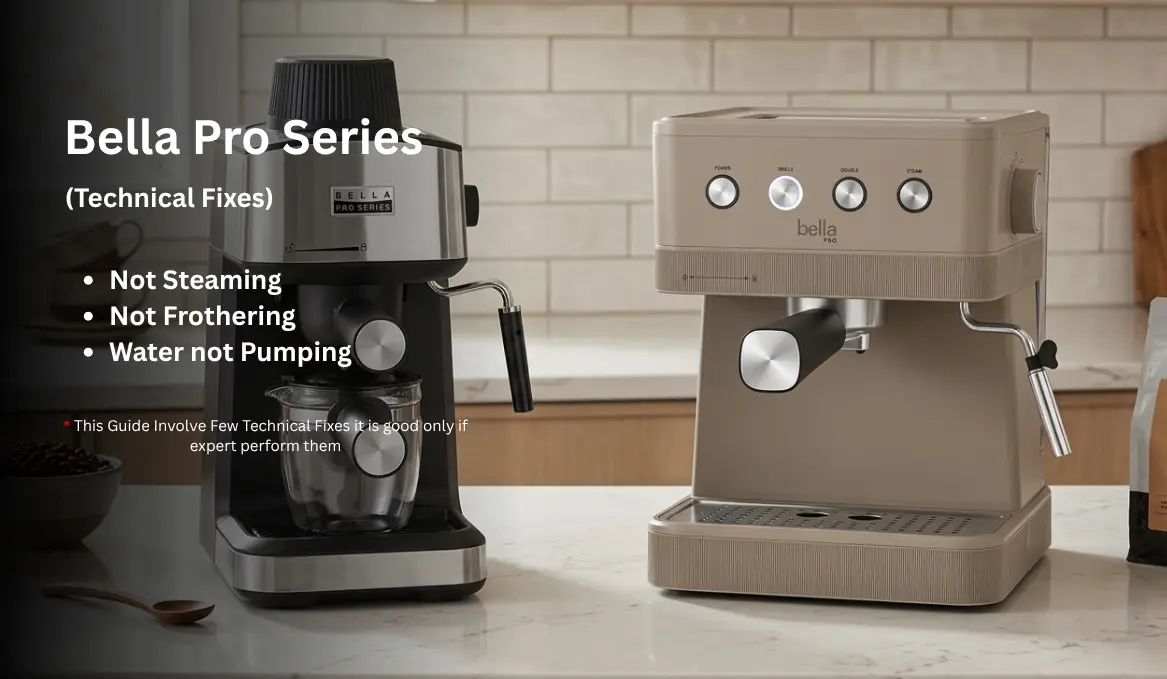
If your bella pro espresso machine not working, the problem usually starts before the machine completely stops brewing. Many owners first notice weaker shots, delayed pump sound, steam pressure dropping, or water taking longer to move through the portafilter. These early warning signs often point to airflow inside the pump chamber, mineral narrowing inside the thermoblock channel, or a partially restricted brew solenoid valve, not a failed machine.
Across models like the Bella Pro Series 90195 Espresso Machine, Bella Pro 20-Bar Espresso Maker, and the Bella Pro Capsule & Ground Coffee Combo Espresso Machine, the internal layout uses a vibration pump, aluminum thermoblock heating path, and pressure-directing valve system that protects itself when water flow becomes unstable.
In this guide, we dive deep into the top problems, not pumping water, not brewing/pulling shots, and not frothing, and explain both simple user fixes and expert repair steps. Whether you have a Bella Pro 19 Bar (model 90166), 20 Bar (90196) or the newer Barista Elite, these tips will help you get it working (and keep it safe and up to date).
Not Pumping Water:
First, check the water tank. Make sure it’s filled above the minimum level (5 oz.) and snapped fully into place. If the tank isn’t seated correctly, the pump won’t draw water. The manual specifically advises pressing firmly on the tank to ensure it’s positioned properly.
Next, try priming the pump to remove any trapped air (an airlock). Unplug the machine, then plug it back in. With the drip tray removed and no coffee inserted, press the brew button and run the machine for about 30–60 seconds, then turn it off, wait briefly, and repeat. This short on/off cycling often helps pull water into the pump.
Another helpful trick is gently raising and lowering the water reservoir several times. Users report that when bubbles appear during reseating, it usually means water is entering the pump.
If the pump still doesn’t pull water, inspect the inlet valve under the tank. Remove the reservoir and gently press the small spring-loaded plastic valve with a finger or syringe to make sure it isn’t stuck or clogged. Then reinstall the filled tank.
Finally, perform a full pump-priming cycle:
- Fill the tank.
- Turn the dial to WATER.
- Hold the double-shot button (without coffee).
- Let the pump run until the tank empties.
This procedure fully primes the internal water system. In most cases, “no pump” problems are resolved by refilling the tank, reseating it correctly, and running a proper priming cycle until water begins flowing.
If the issue continues, a repair technician may need to inspect the internal components. Bella Pro espresso machines typically use a 19-20 bar vibratory pump along with a one-way inlet valve beneath the reservoir. A technician will:
- Unplug the machine and open the housing safely
- Test the pump for voltage and electrical continuity
- Listen for the pump’s humming sound
- Check whether the pump piston or check valve has failed
- Blow compressed air or water through inlet tubing to check for blockages
- Inspect the water-level sensor or float switch (if present)
If the pump hums but doesn’t move water, the inlet valve or pump itself may need cleaning or replacement. Technicians sometimes use a syringe to force water into the inlet line to clear stubborn airlocks.
Because Bella Pro machines generally have no user-serviceable internal parts, internal repairs should be handled carefully. If needed, the inlet valve can be cleaned or replaced, wiring connections secured, and the pump repaired or swapped.
Always follow safety precautions:
- Disconnect power before opening the machine
- Reinstall seals, O-rings, and gaskets securely before testing
- Never run the espresso maker with an empty water tank
Not Brewing:
Start by checking the brew head and filter setup. First, make sure the portafilter is locked in properly. If it isn’t seated tightly, coffee can leak around the sides instead of flowing through the basket. Insert the handle firmly and rotate it slightly past the normal stop until it feels snug.
Next, confirm you’re using the correct filter basket:
- Use a pressurized basket for pods or pre-ground coffee.
- Use a non-pressurized basket for freshly ground beans.
Also check that the basket is installed right-side up.
Then clean the filter basket edges and brew head surface. Wet coffee grounds sometimes stick to the rim and prevent a proper seal. Wipe the basket edge and the brew head with a clean, damp cloth to remove any residue.
After that, check the coffee grind size and tamp pressure. Coffee that’s too fine or tamped too firmly can block water flow. If the basket holes appear clogged, rinse them under running water or clear them using a cleaning pin.
It also helps to preheat the machine:
- Run a blank shot (no coffee).
- Warm the portafilter and cups before brewing.
If you recently used the steam function, the boiler may still be too hot. Many machines temporarily stop brewing after steaming. Run water through the steam wand and allow the boiler to cool slightly before pulling another shot.
In short, most weak-flow brewing problems are solved by:
- locking the portafilter correctly.
- cleaning the basket and brew head.
- adjusting grind size and tamp pressure.
- preheating the machine properly.
- allowing cooldown after steaming.
If the machine still won’t brew correctly, a technician will check the group head seal and pressure system. One common issue is a worn group gasket (the rubber seal behind the portafilter). If this seal is flattened or damaged, pressure leaks during brewing and the shot won’t form properly. In that case, the gasket must be replaced.
A technician may also:
- test the brew button switch.
- run the pump briefly without the portafilter attached to confirm water flow.
- inspect the internal solenoid valve that directs pressure between brew head and steam wand.
- check the pressure sensor or gauge for faults.
If the pressure gauge stays at zero even while the pump runs, the sensor or pressure pathway may be defective. Additional service checks often include:
- cleaning or replacing the metal brew screen.
- inspecting the portafilter detection microswitch (if equipped).
- checking for mineral scale buildup inside brew passages.
- running a descaling cycle as recommended in the manual.
- testing control board output when the brew button is pressed.
In more serious cases, restoring proper brewing may require replacing worn seals, clearing internal valves, or repairing pump or electronic components.
Not Frothering (Steam/Wand Issues):
Start by checking technique and cleanliness, since most steam problems come from setup issues rather than hardware faults. First, use cold, fresh milk. Skim or 2% milk typically froths best. Fill the frothing pitcher no more than one-third full, because milk expands significantly while steaming. Next, position the pitcher correctly:
- Tilt the pitcher slightly.
- Keep the steam tip just below the milk surface.
- Gently move or rotate the pitcher while steaming.
This motion helps introduce air and create foam. If no steam comes out, check the water level in the main tank. The steam system needs enough water to build pressure. Some Bella Pro models require the tank to be filled above the mid-level (around the 4-cup mark) before producing full steam.
Before frothing milk:
- Press the STEAM preheat button.
- Wait until the indicator light becomes solid.
- Then switch the dial to STEAM.
If you switch too early, the machine may release only hot water instead of steam. Always purge the steam wand briefly before and after each use by releasing steam into a cloth. This clears condensation and prevents milk buildup inside the wand. If steam output is weak or blocked:
- Unscrew the steam tip.
- Soak it in hot water.
- Remove any dried milk residue.
- Reattach and test again.
Keeping the steam tip clean is essential. Even small blockages can stop proper steam flow. In short, most frothing issues are solved by:
- using cold milk.
- filling the tank adequately.
- waiting for steam preheat.
- purging the wand.
- cleaning the steam tip regularly.
If household troubleshooting doesn’t restore steam performance, a technician will inspect the heating and steam control system. Many Bella Pro machines (including Barista-style models) generate steam using a thermocoil heating element. A technician will:
- test the thermocoil for electrical continuity.
- check whether it’s receiving proper voltage.
- inspect the thermal fuse for failure.
If the thermocoil or fuse is damaged, the machine won’t heat water enough to produce steam. They may also inspect the steam solenoid valve, which directs pressure between brewing and steaming modes. If this valve sticks in brew mode, steam pressure never reaches the wand.
Additional technician checks often include:
- measuring steam pressure inside the heating system.
- inspecting the pressure switch (if equipped).
- descaling mineral buildup inside the thermocoil.
- cleaning or replacing internal anti-siphon valves.
- replacing clogged or damaged steam tips.
Heavy scale buildup inside the heating path can reduce steam output significantly. In severe cases, the thermocoil assembly itself may need replacement. Technicians sometimes test the steam circuit directly by pushing water through it using a syringe or hand pump. If the heating pathway fails to build pressure during testing, the internal heating assembly is usually the cause.
In short, persistent “no steam” problems typically require repairing the thermocoil, fixing the steam valve system, or replacing blocked internal components to restore proper frothing performance.
Conclusion:
Troubleshooting your Bella Pro espresso machine often comes down to simple fixes like properly priming the pump, cleaning brew parts, or wiping the steam wand. Following manufacturer guidance – such as refilling past the minimum water mark and tightening the portafilter correctly, solves most user-level issues. For more stubborn problems, a qualified technician can inspect internal components (pump, valves, heating elements) to diagnose failures.
Note: some Bella Pro models, like model 90195, were even subject to a safety recall in 2025 for a defective brew handle, if you own that unit, stop use immediately and contact support.
By methodically checking each part, you can address the “bella pro espresso machine not working” issues comprehensively. With the steps above and a little patience, you’ll be sipping perfectly pulled shots and creamy cappuccinos again in no time.